
A candid wedding photographer tells the story of the day as it happens, without directing it. No posing, no stopping a scene to do it again, no asking you to repeat a kiss. The work is to watch, move, wait, and take the picture when something happens.
It is the style I practise, and the one most often requested by couples who tell me "we don't like posing". On this page I explain what candid, documentary wedding photography really is, what it is not, how it is done, and how to recognise it when you look at a photographer's website.
What documentary wedding photography is
In Italy it is called reportage, a word borrowed from journalism: a reporter does not construct events but documents them. Applied to a wedding, it means the photographs come from what you and your guests do, not from what the photographer asks of you.
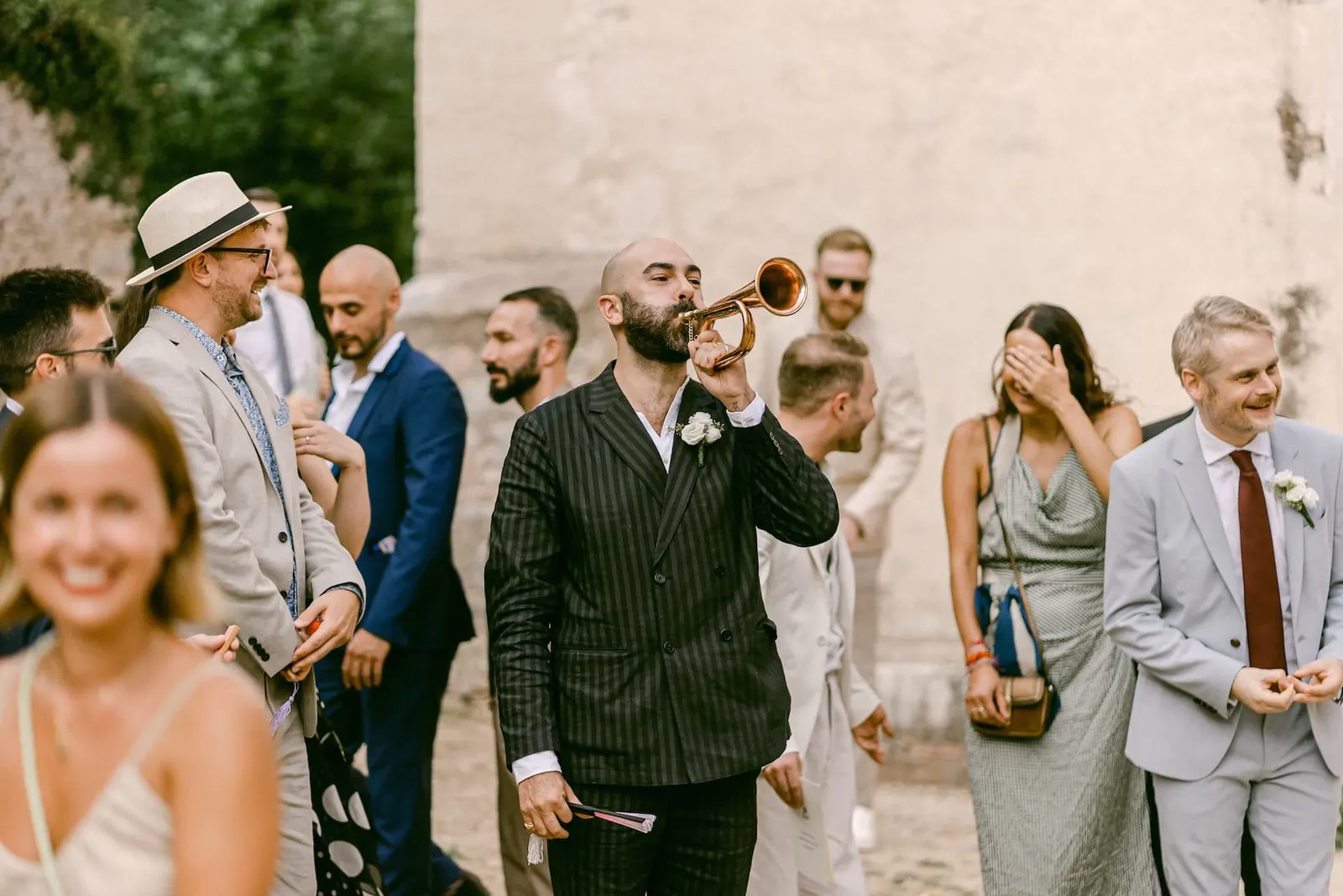
In practice, the subject of the images changes. In traditional coverage the centre is the couple looking into the camera. In documentary coverage the centre is what is happening: a father arranging the veil, a best man searching his pockets for the rings, a grandmother tasting porchetta for the first time.
What it is not
It is not the total absence of portraits. Almost every couple wants a few photographs together, and rightly so. In documentary coverage there are portraits, but they take twenty minutes and they are not poses: I take you somewhere with beautiful light and ask you to walk and talk.
It is not shooting at random. Done well, it has precise composition and chosen light. The difference is that the photographer moves to find them, instead of moving you.
It is not giving up group photographs. Family photographs are taken, from a short list prepared in advance, in a quarter of an hour. Then we go back to telling the story.
How a candid wedding photographer works
Preparing beforehand
To avoid stepping in during the day, you have to know it. I ask for the schedule, the names of the important people, what is going to happen as a surprise. If I know a speech will start during dinner, I am already on the right side of the room.
Using the light that is there
In church I don't use flash: a bright nave holds up perfectly well in natural light, and the photographs stay faithful to what you had in front of your eyes. In the evening I work with fast lenses and slow shutter speeds, to keep the warm tone of the lights instead of flattening it.
Moving along the sides
During the ceremony I stay behind the guests and along the sides of the nave or the avenue, never passing between you and the people watching you. In private moments, such as a first look, I use a long lens and keep my distance.
Watching everyone else too
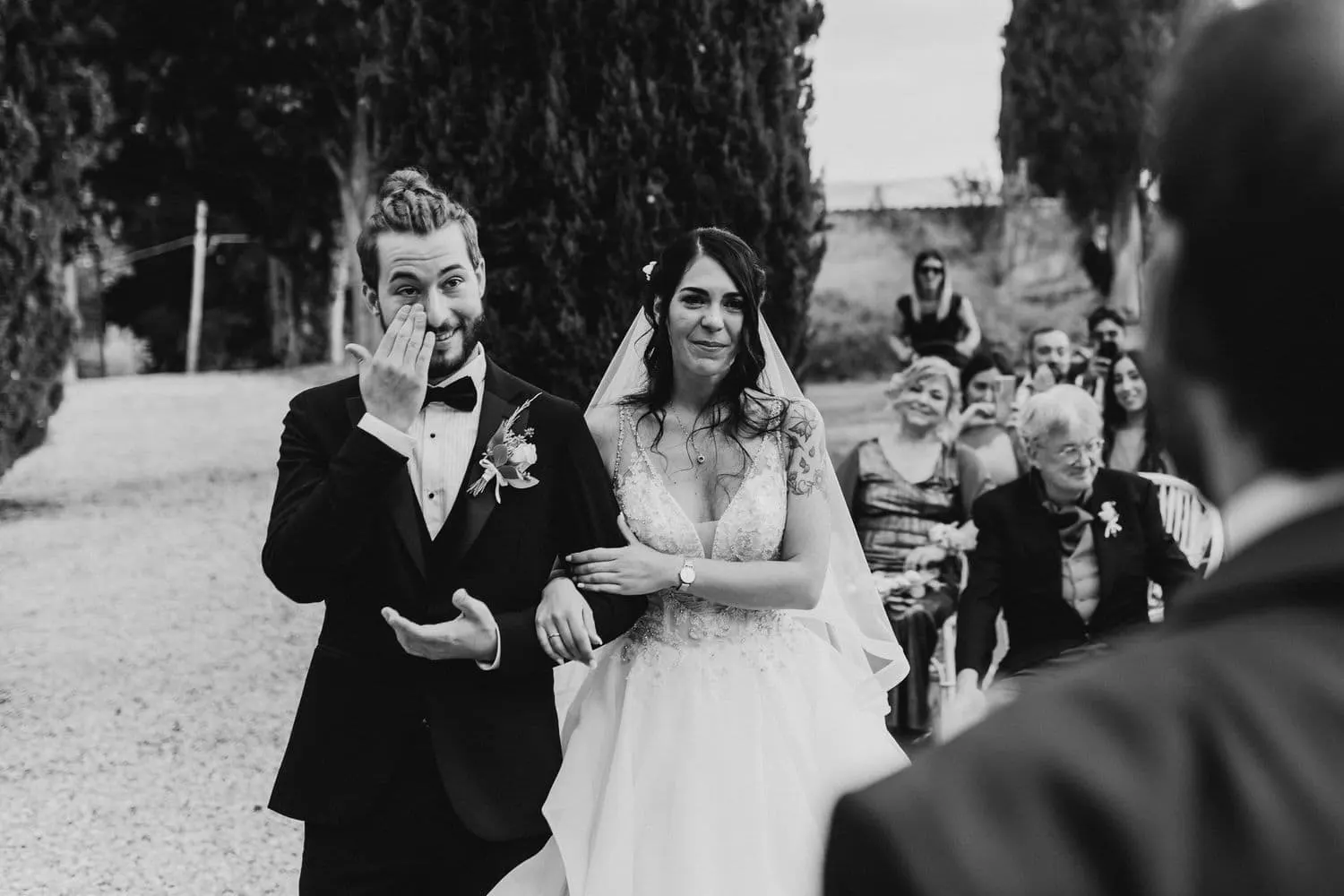
While everyone watches the bride walk in, someone has to watch the groom. During the vows I photograph the two of you but keep an eye on your parents. At Micaela and Raffaele's wedding, the photograph I remember most from the ceremony is Raffaele wiping away a tear while a friend was speaking.
Who it suits
It suits couples who want to look back at the day as it was, those who are uncomfortable in front of a camera, and those whose guests matter a great deal to them and who want to find them in the photographs. It works particularly well for destination weddings in Italy, where family and friends have travelled far to be there.
It suits less those who mainly want constructed, magazine-style images, with many poses and a lot of time given to portraits. There is no right choice in absolute terms: in my guide to wedding photography styles I compare documentary, fine art and natural.
How to recognise real candid coverage
"Candid" and "documentary" appear on almost every website. To see whether the word matches the work, look at three things.
- A whole wedding. Not a selection of the twenty best frames: one day from getting ready to the party. If halfway through the gallery every photograph is a pose, it is a different style.
- The guests. In documentary coverage there are many faces that are not yours: people laughing, crying, dancing. They are the proof that the photographer was watching the day, not only the couple.
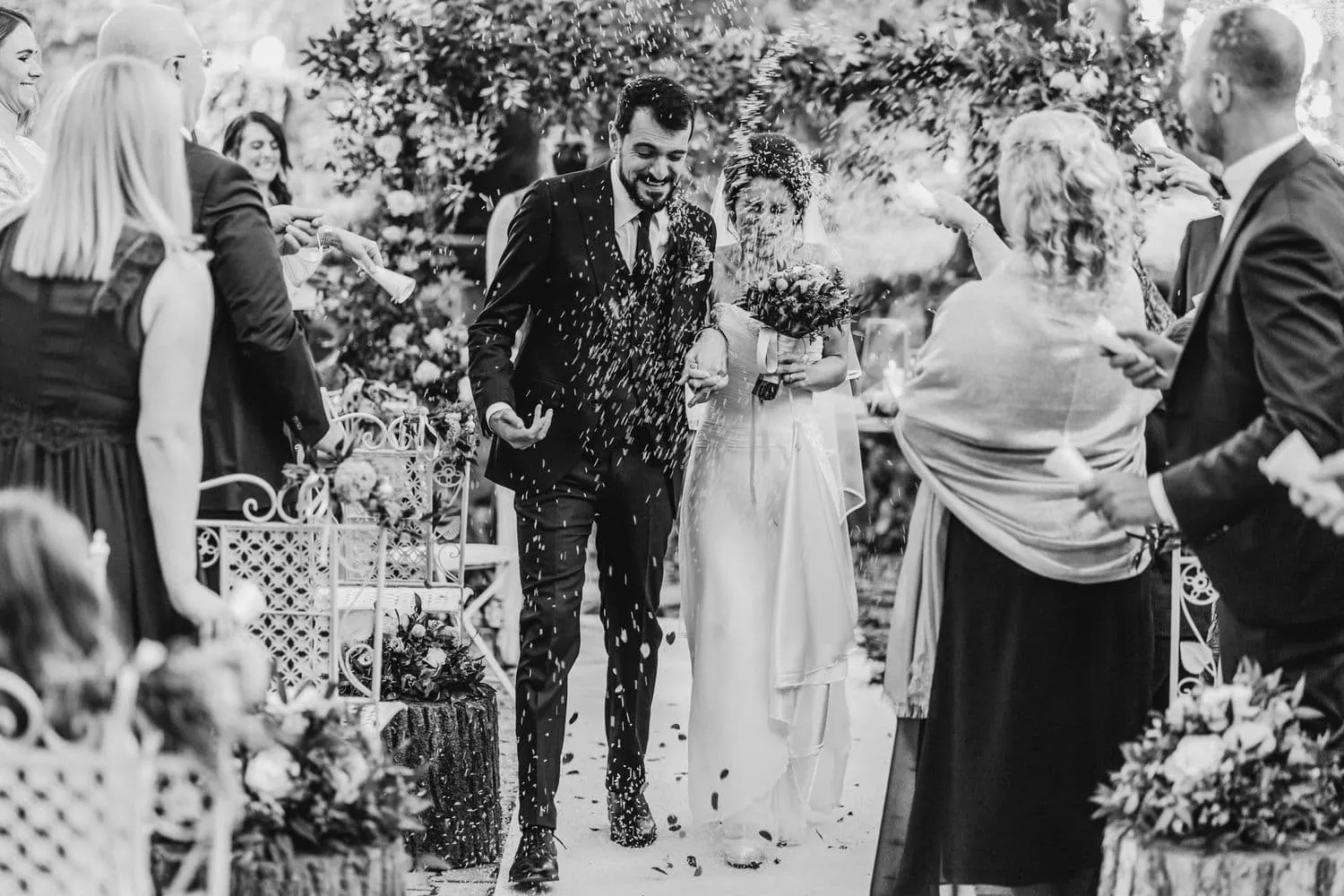
- Sequences. Three or four photographs in a row of the same moment, showing how it unfolded. A pose is a single image; an event produces several.
In my wedding stories the days are published in full for exactly this reason.
What it takes from you
Little, but it counts.
- A schedule with some slack. Candid photography lives on what happens between one moment and the next. If every minute is taken, nothing happens.
- Natural light while getting ready. Curtains open, lamps off, a tidy room.
- Twenty minutes for the two of you, ideally in the last hour of sun.
- Forgetting about me. After the first half hour it almost always happens.
Frequently asked questions
What is a candid wedding photographer?
A photographer who documents the day without directing it: no poses, no repeated scenes, photographs caught as things happen. It is also called documentary or reportage wedding photography.
Do we still get portraits with a documentary photographer?
Yes. About twenty minutes go to couple portraits and a quarter of an hour to family group photographs. The rest of the day is told without intervention.
Is candid photography good for camera-shy couples?
It is the best fit. With no posing to do, you soon forget the camera and the photographs show people as they are.
What is the difference between documentary and traditional wedding photography?
In traditional photography the photographer organises scenes and asks for poses. In documentary photography the photographer observes and adapts to what happens. The subject of the images changes, and so does your role during the day.
Does a documentary wedding photographer use flash?
As little as possible. In church and during delicate moments the work is done with available light and fast lenses. Flash is used in the evening, on the dance floor, and never direct.
Where do you work as a candid wedding photographer in Italy?
Mainly in Umbria and Tuscany, and across the rest of Italy for destination weddings. I live in Terni, between Rome and Florence.
If you are looking for a candid wedding photographer in Tuscany, Umbria or elsewhere in Italy, look at the portfolio and the stories, or tell me about your wedding: I answer every message personally.


